Where do your pupils go next? For an alternative provision or pupil referral unit, it’s the question that matters most, and often the hardest to answer. You know each pupil well while they’re with you, but once they leave, the story tends to live in someone’s memory or an old spreadsheet.
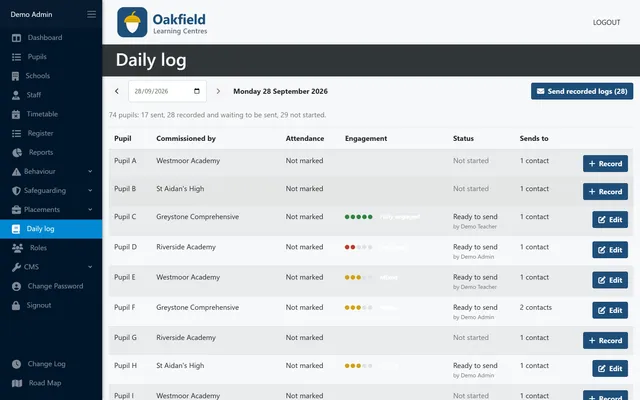
PupilDB now has placements: a record of who commissioned each pupil’s place and why, their targets and reviews while they’re with you, and where they went when they left.
Who commissioned it, and why
Each placement records:
- who commissioned it: a school, a local authority or another body
- why: the reason for the placement, such as a permanent exclusion or a medical need, with room for more detail
- the type of placement, such as full-time AP, part-time or dual-registered, a short-term intervention or tuition
- dates, days and hours, including when it started and when it’s planned to end
- the people involved: inclusion leads, social workers, virtual school heads and so on
Contacts are kept in one shared list. Enter a school’s inclusion lead once and pick them on every placement. If someone moves on, mark them as having left: their history stays, and they stop receiving daily reports. Each school’s record has a Contacts & placements tab showing its people and every placement it has commissioned.
Targets and six-weekly reviews
Every placement has targets, each with a red, amber or green status: on track, achieved or working towards. Record a review every six weeks: who attended, what was agreed and when the next review is due. Each review has a printable record with your logo, so everyone at the meeting can have a copy.
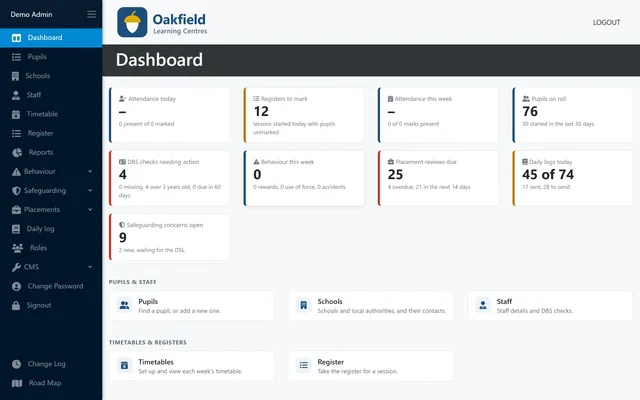
The placements list shows the next review for every pupil, in red if it’s overdue and amber if it’s due soon, and the dashboard has a tile for placement reviews due.
Where pupils go next, and whether it lasted
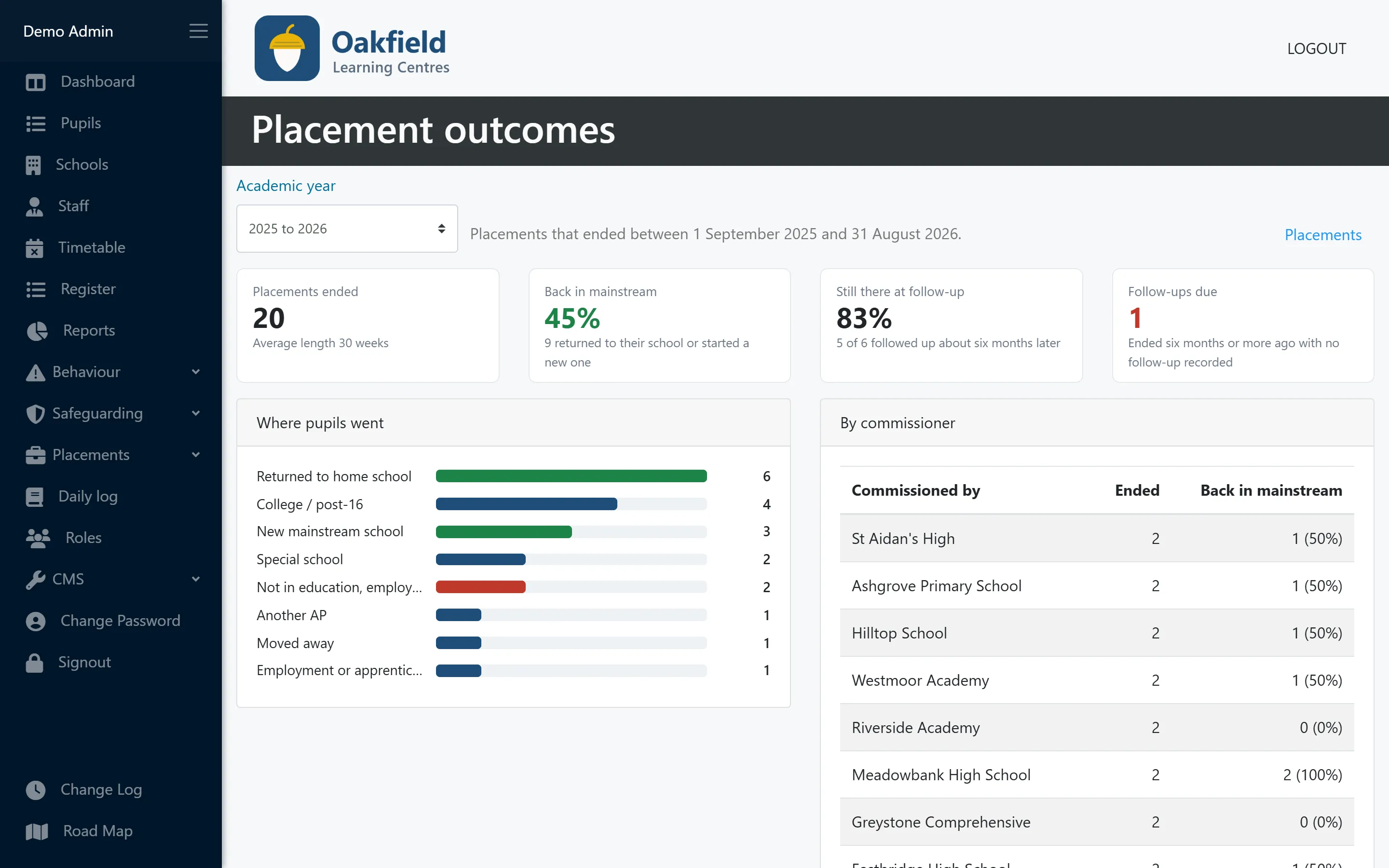
When a placement ends, you record where the pupil went:
- back to their own school
- a new mainstream school
- a special school
- another alternative provision
- college or post-16
- employment or an apprenticeship
- not in education, employment or training (NEET)
- moved away, or somewhere else
About six months later, record a follow-up: is the pupil still there? PupilDB shows you which pupils are due one. The outcomes report brings it together for each academic year: how many placements ended, the percentage back in mainstream, the percentage still there at follow-up, every destination, and the results for each commissioner.
It tracks where pupils go next and whether the move lasted. That’s useful evidence for your leaders, your governors and the schools that commission you.
A page for each commissioner
The commissioner summary lists one school’s or local authority’s pupils, with their attendance this term, hours a week over the last four weeks, targets on track and next review date. A local authority’s summary includes placements from the schools in its area. Print it, or save it as a PDF from your browser, and take one page to your termly meeting with each school.
Figures for invoicing
Each placement can hold its rate (per session, day, week or term), funding type and purchase order number. The invoicing figures page works out what to invoice each commissioner for a month, from each placement’s rate and the sessions the pupil was marked present, and exports it to CSV for your accounts software.
How PupilDB helps
Placements and outcomes are included in every PupilDB plan at no extra cost. They work hand in hand with the new daily log, which sends each pupil’s day to the people on their placement. If you’d like to see both with fictional demo data, book a demo.